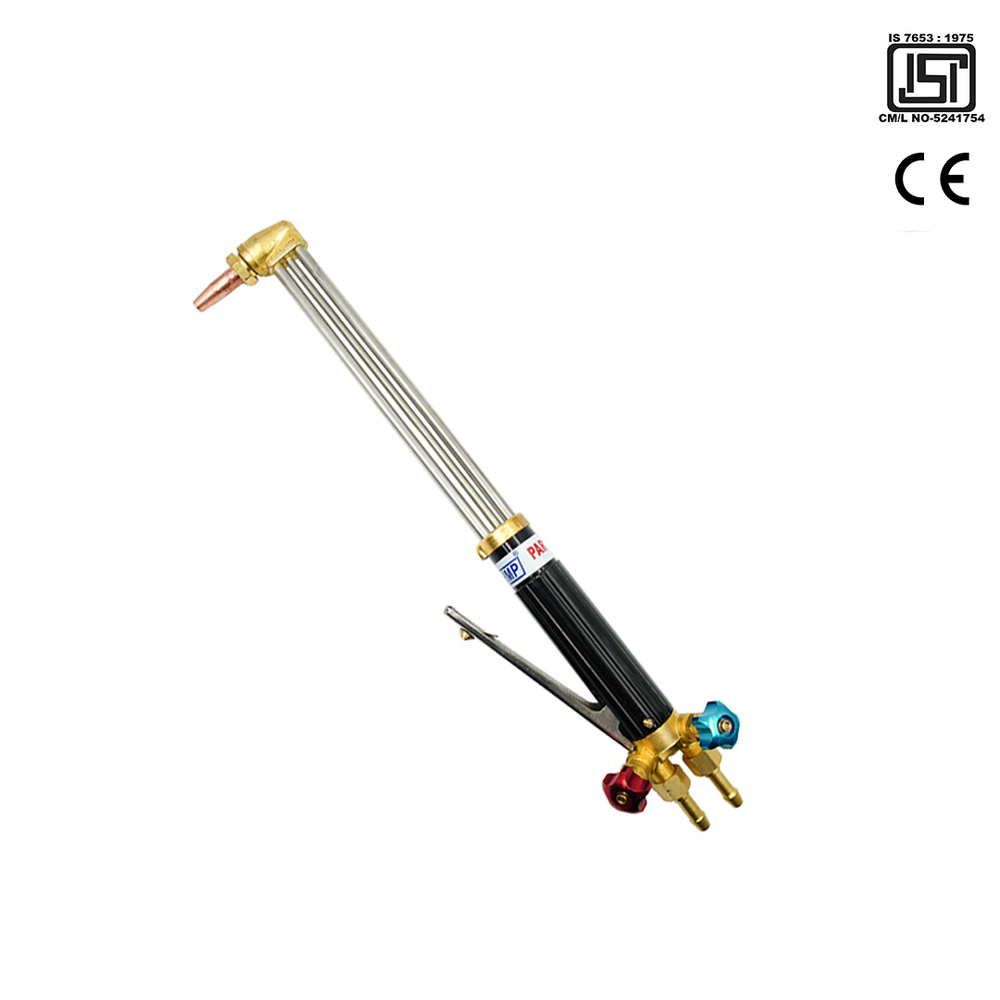
FAQs of Manual Cutting Blowpipe ( Partogen 3 ):
Q: How do I properly set up the Manual Cutting Blowpipe (Partogen 3) for gas cutting?
A: To set up the Partogen 3, connect the threaded hose connectors to your oxygen and acetylene or LPG supply using compatible hoses. Attach the suitable ANM or PNM nozzle based on your desired cutting thickness. Use a spark lighter for manual ignition to start the cutting process safely.
Q: What gases are compatible with the Partogen 3 cutting blowpipe?
A: The blowpipe operates with oxygen combined with acetylene or LPG fuel gases. Ensure that both gas sources are regulated for safe usage during cutting operations.
Q: When should I use Partogen 3, and for what materials is it suitable?
A: Use Partogen 3 for cutting applications where precise, manual control is preferred. Its suitable for mild steel, stainless steel, and cast iron plates, and is effective up to a cutting thickness of 300 mm using the appropriate nozzle.
Q: Where can I utilize the Partogen 3 blowpipe effectively?
A: This cutting blowpipe is ideal for industrial workshops, fabrication units, maintenance operations, and construction sites. Its durable design and compliance with IS 7653 standards make it suitable for professional and heavy-duty environments.
Q: What is the process for igniting the blowpipe, and why is a spark lighter recommended?
A: Ignition of the Partogen 3 is manual; a spark lighter is recommended to safely ignite the gas mixture at the nozzle tip, avoiding accidental burns or mishaps associated with other types of ignition methods.
Q: What are the main benefits of using a manual cutting blowpipe like Partogen 3?
A: Benefits include precise manual control, portability, ease of maintenance, and the ability to handle a range of plate thicknesses up to 300 mm. Its leak-proof, heavy duty design ensures user safety and consistent performance.